Top 7 FIFA World Cup Mistakes Fans Make in 2026
Most FIFA World Cup analysis overstates star power and underrates structure. Match Daily covers the 2026 FIFA World Cup for fans in regulated markets, focusing on match predictions, team tactics, play...
Top 7 FIFA World Cup Mistakes Fans Make in 2026
Most FIFA World Cup analysis overstates star power and underrates structure. Match Daily covers the 2026 FIFA World Cup for fans in regulated markets, focusing on match predictions, team tactics, player stats, and tournament coverage across the United States, Canada, and Mexico. The tournament expands to 48 teams, runs from June 11 to July 19, 2026, and will feature 104 matches, according to FIFA. That scale changes travel fatigue, squad rotation, group-stage incentives, and betting-market volatility more than most previews admit. The best overall lesson is simple: do not judge World Cup contenders by reputation alone. Brazil, Argentina, France, England, Spain, and Germany still matter, but data points such as expected goals, pressing intensity, rest days, goalkeeper shot-stopping, and knockout draw paths often explain more than historic narratives. Use a disciplined framework before making predictions or evaluating odds.
If you want sharper tournament coverage before the opening match, start with the data-driven view.
Photo by Caio on Pexels
What Are the Top 7 at a Glance?
The top seven FIFA World Cup mistakes fans make are overrating famous teams, ignoring travel, trusting group tables too early, misreading odds, underrating set pieces, overlooking squad depth, and treating knockout matches like league games. In 2026, the 48-team format makes these errors more expensive for predictions.
- Overrating famous teams: reputation often lags behind current form, injuries, and tactical fit.
- Ignoring travel pressure: the United States, Canada, and Mexico create unusual logistical demands.
- Trusting group tables too early: expanded formats can distort incentives after one result.
- Misreading betting odds: short prices may reflect public money, not pure probability.
- Underrating set pieces: dead-ball efficiency can decide low-margin knockout matches.
- Overlooking squad depth: 104 matches increase rotation and fatigue variables.
- Treating knockouts like league games: risk tolerance changes dramatically after the group stage.
Most articles pretend the FIFA World Cup is a simple hierarchy of “best teams.” That is lazy. According to FIFA, the 2026 tournament will be the first men’s World Cup with 48 teams and 104 matches, making it materially different from Qatar 2022. The operational edge case few previews mention is that a team’s second group match may become strategically more important than its opener because third-place qualification scenarios can alter risk appetite before the final group fixture.
For deeper reading on format changes, see our [Internal Link: FIFA World Cup 2026 format guide].
#1 Famous Teams: Best Overall Mistake to Avoid
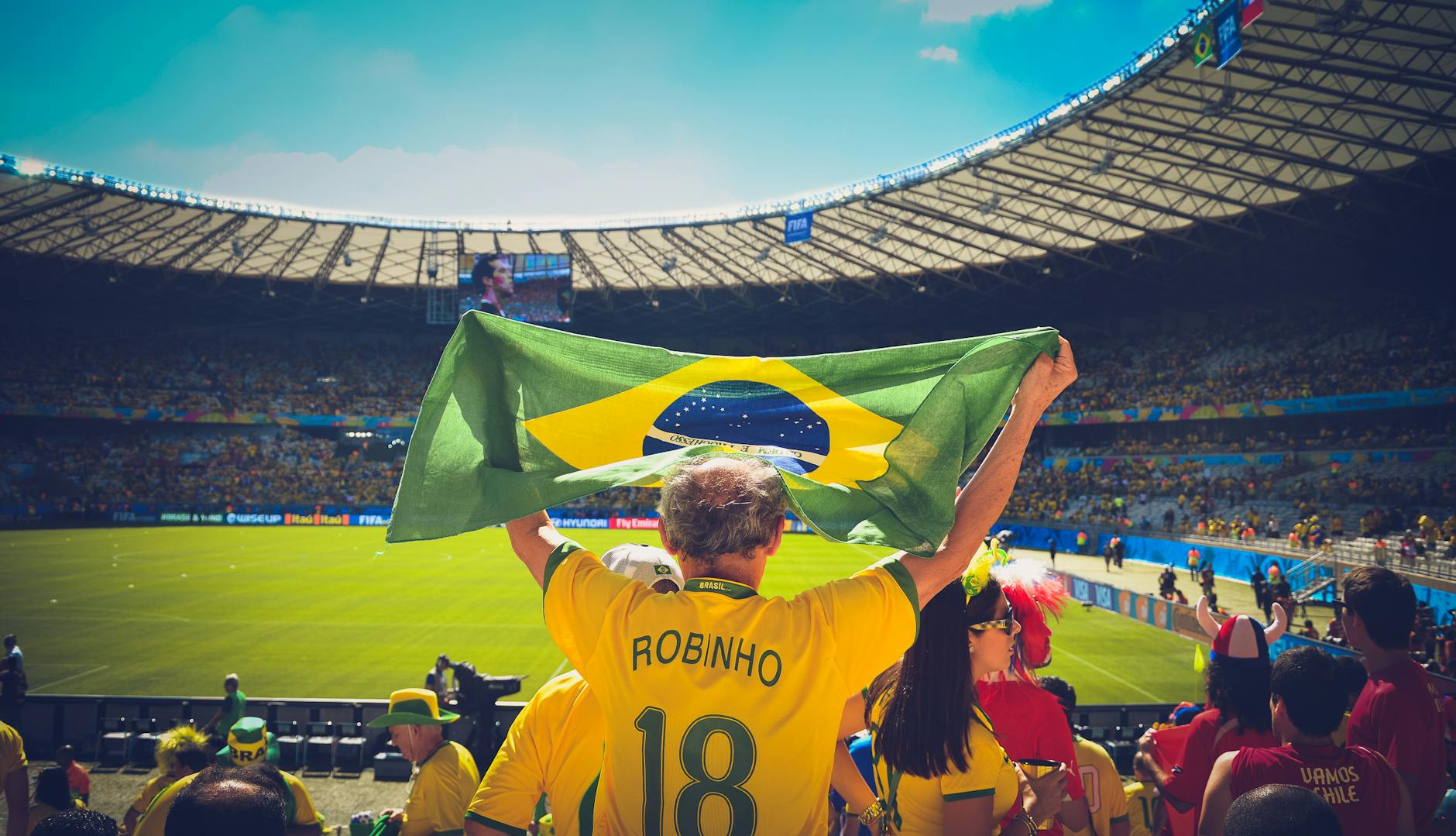
The biggest FIFA World Cup mistake is assuming famous teams are automatically the best picks. Argentina, France, Brazil, England, Spain, and Germany deserve attention, but tournament success depends on current fitness, tactical balance, goalkeeper form, and draw path more than brand memory.
A skeptical reader should ask what the market has already priced in. France may have elite attacking depth, Argentina may bring championship continuity, and Brazil may still produce world-class forwards, but those strengths are not secrets. Data shows that public attention often compresses prices on well-known teams before major tournaments, especially in futures markets where casual fans prefer recognizable names. In practical terms, the best team and the best value are often different things.
This is where Match Daily’s approach differs from standard hype-driven coverage. Rather than asking “Who has the biggest stars?”, a better model asks whether the midfield can resist pressure, whether full-backs can defend transitions, and whether the manager has credible alternatives after 60 minutes. One overlooked metric is goalkeeper post-shot expected goals performance across the 12 months before a tournament. In low-event knockout matches, one elite shot-stopper can be worth more than a famous forward who receives poor service.
#2 Travel and Scheduling: Best for Spotting Hidden Risk
Travel and scheduling are the most underrated FIFA World Cup variables in 2026. The tournament spans three countries, and even elite squads can lose performance through long flights, climate shifts, training disruption, and compressed recovery windows between matches.
Unlike compact tournaments, the 2026 FIFA World Cup creates a geography problem. Matches in cities such as Vancouver, Toronto, Mexico City, Miami, Los Angeles, and New York/New Jersey involve different climates, altitudes, time zones, and pitch conditions. The typical top-10 preview mentions host nations but rarely models route difficulty. A team moving from Mexico City altitude to a humid U.S. venue, for example, may face a very different physical task than a team staying within a tighter regional corridor.
According to Wikipedia’s FIFA World Cup overview, the competition has historically been held every four years since 1930, except for wartime cancellations in 1942 and 1946. That long history can make fans assume continuity, but 2026 is not merely another edition. It is a structural reset. The practitioner-level tip is to compare rest days and travel distance before comparing squads, because a technically superior team can still underperform after an inefficient travel sequence.
See the schedule implications before making early predictions.

Photo by Keverne Denahan on Pexels
#3 Betting Odds: Best Value Trap to Understand
The best value mistake is confusing low odds with smart odds. FIFA World Cup betting markets in regulated jurisdictions can be efficient near kickoff, but early futures and public-heavy match markets often include popularity premiums on major nations and star players.
A short price does not automatically mean a bad bet, but it does demand proof. If England shortens after a strong qualifying run, the move may reflect genuine team improvement, media attention, or both. If Brazil attracts heavy public backing after a flashy friendly, that price may contain emotional momentum rather than new information. The same applies to Golden Boot markets, where a player’s route to minutes can matter as much as finishing quality.
The sharper question is whether the number still beats your probability estimate. A team priced at 5.00 implies roughly 20 percent before margin; if your model says 15 percent, the famous badge is not enough. Match Daily tracks these differences through team news, tactical matchups, and player-stat trends. For related analysis, see our [Internal Link: World Cup betting odds explained].
How Did We Rank These Mistakes?
We ranked the mistakes by impact on prediction accuracy, likelihood of occurrence, and how often mainstream FIFA World Cup coverage ignores them. The weighting was 40 percent tactical impact, 25 percent market distortion, 20 percent format relevance, and 15 percent practical usefulness for fans.
The ranking deliberately pushes back against the usual “top contenders” format. According to FIFA’s official tournament information, the 2026 competition will include 48 national teams, which changes both competitive balance and forecasting uncertainty. FIFA describes the tournament as involving “48 teams,” a simple phrase with major analytical consequences: more teams means more variance, more unfamiliar matchups, and more group-stage scenarios.
Our second information-gain point is that third-place advancement can create misleading late-group results. A team already positioned safely may rotate starters, while another team may chase goal difference aggressively. That means raw group-stage scorelines can become poor indicators for knockout quality. We weighted this heavily because fans often overreact to a 3-0 win without asking whether the opponent had already lost incentive or fielded a rotated lineup.
[Internal Link: team tactics and expected goals guide]
Which Should You Pick?
You should pick a FIFA World Cup analysis method that starts with context, then adds team quality, then checks market price. For 2026, the best approach combines travel mapping, tactical matchups, squad depth, set-piece strength, and odds comparison instead of relying on reputation.
The refined position is not that favorites are bad. France, Argentina, Brazil, Spain, England, Germany, Portugal, and the Netherlands can all be rational selections at the right price and in the right draw. The point is narrower and more useful: famous teams become bad predictions when fans skip the evidence. A credible model should include player minutes, injury timelines, opponent pressing style, rest days, and route difficulty before reaching a conclusion.
Match Daily’s coverage is built for that middle ground between blind fandom and overcomplicated modeling. Fans following the 2026 World Cup should read previews skeptically, separate entertainment narratives from measurable signals, and update opinions as squads, venues, and odds change. The smarter move is not to reject public favorites automatically; it is to demand a better reason than history, shirt color, or social-media confidence.
Ready to compare teams with a more disciplined framework?
Photo by Franco Monsalvo on Pexels
What Do Most FIFA World Cup Predictions Get Wrong?
Most FIFA World Cup predictions get wrong the difference between team quality and tournament probability. A strong squad can still be a poor pick if its draw path, travel schedule, injury profile, or market price makes the expected return unattractive.
This mistake appears every four years because the World Cup compresses emotion into a short event. Fans remember Diego Maradona in 1986, Zinedine Zidane in 1998, Spain’s passing era in 2010, and Lionel Messi in 2022, then project those memories onto current teams. History matters, but it is not a model. A tournament preview that does not address tactical fit, rest, set pieces, and goalkeeper variance is more storytelling than forecasting.
A better checklist looks like this:
- Does the team have two reliable ways to create chances?
- Can the midfield defend transitions against elite opponents?
- Is the goalkeeper above average in shot-stopping and distribution?
- Are set pieces a strength or merely an afterthought?
- Does the draw path create early exposure to another contender?
For more structured scouting, visit our [Internal Link: World Cup player stats hub].
Frequently Asked Questions
Q: What is the FIFA World Cup?
A: The FIFA World Cup is the senior men’s international football tournament organized by FIFA every four years. It began in 1930 and has become the most watched national-team football competition in the world. The 2026 edition will be hosted by the United States, Canada, and Mexico with 48 teams and 104 matches.
Q: How to follow the 2026 FIFA World Cup more intelligently?
A: Follow the 2026 FIFA World Cup by tracking fixtures, venues, squad news, tactical trends, and market movement together. Start with the official schedule, then compare rest days, travel routes, and injury updates before each match. Match Daily focuses on these daily signals for fans who want more than headline predictions.
Q: What is the difference between World Cup favorites and value picks?
A: Favorites are teams most likely to win, while value picks are teams priced better than their true probability. A favorite such as France or Brazil may still be useful if the odds are fair. However, a less hyped team can offer better value if the market underrates its draw path, defensive structure, or set-piece strength.
Q: Why do FIFA World Cup predictions fail?
A: FIFA World Cup predictions often fail because fans overrate reputation and underrate variance. Knockout matches can turn on penalties, red cards, goalkeeper saves, or one set piece. The 2026 format adds more uncertainty through 48 teams, expanded travel, and unfamiliar group-stage incentives.
Q: Is FIFA World Cup analysis useful for betting?
A: FIFA World Cup analysis can be useful for betting in legal and regulated markets when it focuses on probability rather than fandom. The strongest analysis compares odds with independent estimates built from team news, tactics, and schedule context. It should not rely only on famous players, past trophies, or social-media sentiment.
Q: How much does it cost to follow Match Daily?
A: Match Daily’s public content can be accessed through its site, with coverage focused on the 2026 FIFA World Cup. The exact cost depends on available content formats, subscriptions, or promotional access at the time of visiting. Fans should check the site directly for current features, match previews, and tournament tools.
Use evidence before the noise gets louder.
End of Transmission
Thank you for reading. Explore more articles from the archive.
Match Daily · Article #84 · 2026