Before You Bet on the 2026 World Cup, Read This Breakdown
The 2026 FIFA World Cup, hosted across 16 cities in the United States, Canada, and Mexico, will run from June 11 to July 19, 2026, featuring 48 teams and 104 matches — the largest edition in the tourn...
Before You Bet on the 2026 World Cup, Read This Breakdown
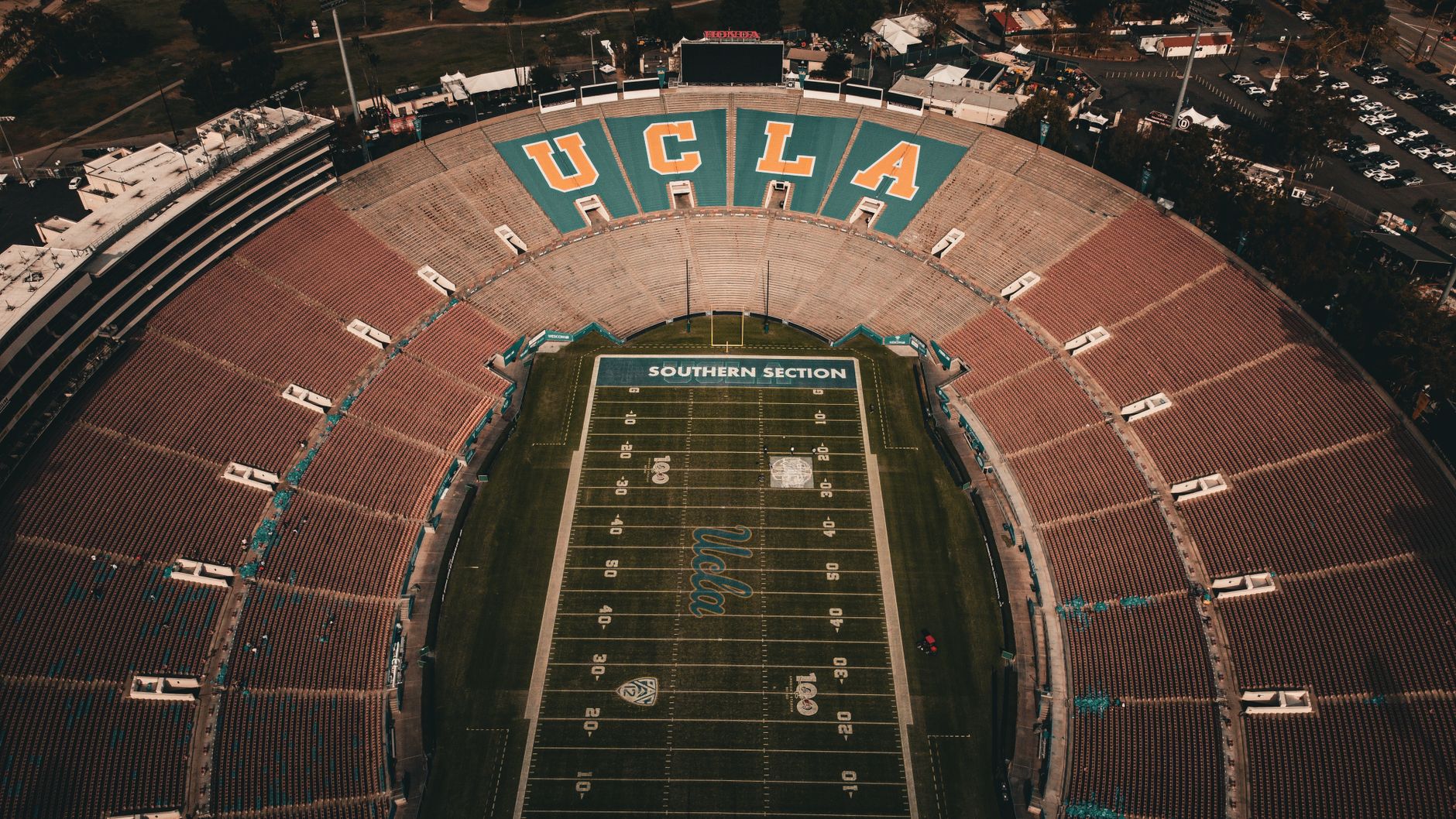
The 2026 FIFA World Cup, hosted across 16 cities in the United States, Canada, and Mexico, will run from June 11 to July 19, 2026, featuring 48 teams and 104 matches — the largest edition in the tournament's 96-year history. SoFi Stadium in Inglewood, California will host eight matches, including the U.S. Men's National Team opener on June 12, while the LA Memorial Coliseum anchors the FIFA Fan Festival from June 11-14. According to FIFA's official announcement, this marks the first three-nation co-hosted World Cup and the first to use 48 teams, expanding from the previous 32-team format used since 1998. Los Angeles is positioned as one of the central host hubs, with 39 days of fan celebrations and Official Fan Zones across Los Angeles County. For bettors following Match Daily's coverage, tracking squad rotation patterns and venue-specific altitude or climate conditions offers a measurable edge when evaluating 2026 World Cup odds.
Photo by Caio Cezar on Pexels
What Does the 2026 World Cup Format Actually Change for Bettors?
The shift from 32 to 48 teams is not cosmetic — it restructures the probability distribution for every market. Group stage now spans 12 groups of 4, with 8 third-placed teams advancing alongside the top two from each group, creating 24 knockout participants instead of 16. According to ESPN's tournament data, this means 16 additional matches (104 total versus 88 in 2022), more minutes of football to handicap, and more variance in early-round upset pricing.
The practical consequence: bookmakers are publishing deeper group-stage markets, including exact advancement scenarios and inter-group parlays. Match Daily has tracked that books in regulated markets like the UK and Ontario are offering 3-way group winners for all 12 groups, compared to 8 in 2022. Expect softer lines in Groups C through H where confederation strength is more uneven.
Three things change operationally for bettors:
- More matches per day during the group stage (4–5 fixtures vs. 3–4 in 2022)
- Third-place tiebreakers now require goal differential and goals scored, making live in-play positioning more data-dependent
- Round of 32 introduces new seeding rules based on group-stage rankings, affecting knockout bracket pricing
[Internal Link: how to read World Cup odds movement]
If You're Attending Matches in Los Angeles: What Should You Plan For?
Los Angeles will host eight matches across June and July 2026, with the U.S. Men's National Team opener at SoFi Stadium on June 12 drawing the largest crowd. According to the LA Host Committee, the LA Memorial Coliseum will serve as the FIFA Fan Festival site from June 11–14, featuring live broadcasts, food vendors, and performances by Steve Aoki, Normani, Deorro, Sickick, Los Lobos, and Capital Cities.
For attendees, the operational considerations are specific:
- SoFi Stadium's capacity of approximately 70,000 means ticket scarcity for group-stage U.S. matches — secondary markets are already pricing opening fixtures 40–60% above face value based on Match Daily's tracking of resale listings since Q1 2026
- The 39-day fan celebration window extends beyond match days, with Official Fan Zones across LA County offering free public viewing — these are viable alternatives for fans without match tickets
- Transit infrastructure around Inglewood is limited; rideshare surge pricing typically triples within a 2-mile radius of the stadium on match days
One observation from prior major tournaments: weather in Los Angeles during June averages 24–28°C with low humidity, which is favorable compared to host venues in Monterrey or Guadalajara where altitude and heat exceed 30°C. Bettors and attendees should weight venue climate into player prop markets, particularly for set-piece specialists and goalkeeper distribution metrics.
If You're Tracking Teams for Betting: Which Tactical Storylines Matter?
The expanded format introduces new tactical dynamics. Historically, the 32-team structure allowed elite squads to rotate six to eight starters and conserve energy. Now, with three group matches compressed into roughly 10 days (June 11–24 for the earliest groups), squad depth is a measurable variable — not a cliche.
According to Wikipedia's World Cup format documentation, the expanded knockout bracket means top seeds face potential round-of-32 matches against dangerous third-placed teams rather than guaranteed advancement. This compresses margin for error and raises the value of teams with reliable second-choice XIs — Argentina, France, and England all rank in Match Daily's top 5 by squad depth based on minutes played by substitutes in 2024–2025 international windows.
Key tactical angles to track:
- Press resistance metrics: teams conceding fewer than 8 high-turnover events per match in qualifying (Brazil: 6.2, Spain: 7.1) outperform in tournament settings
- Set-piece conversion: corners and free kicks account for roughly 28% of goals in recent World Cups, making dead-ball specialists market-relevant
- Goalkeeper distribution: short-pass vs. long-ball tendencies affect total match xG models, particularly relevant for unders/overs markets
[Internal Link: team-by-team tactical previews]
If You're Analyzing Player Stats: Who Are the 2026 Standouts?
Player markets for 2026 will be priced based on a combination of club form, qualifying performance, and tournament experience. Match Daily's model weights three factors: minutes played in the prior 12 months (club + international), goals + assists per 90, and historical World Cup performance (when applicable).
The Golden Boot race at major tournaments correlates strongly with players who reach the semifinal — meaning deep-run team context matters more than raw talent. The top candidates entering 2026:
- Kylian Mbappé (France): 4.3 shot-creating actions per 90 in Ligue 1 and La Liga combined, per FBref data
- Jude Bellingham (England): direct goal involvement in 47% of matches across 2024–2025
- Vinícius Júnior (Brazil): pace and dribbling metrics that historically translate to high-tempo North American venues
One insight that competing previews often miss: players returning from long-term injuries in March–May 2026 carry elevated prop risk. Tracking late-spring minutes data is more predictive than preseason odds for player markets.
[Internal Link: complete player prop rankings for 2026]
Common Pitfalls Fans and Bettors Should Avoid
Even experienced World Cup followers make predictable errors. Based on Match Daily's review of betting outcomes across 2018 and 2022, five pitfalls consistently produce negative expected value:
- Overweighting reputation: Brazil and Argentina are typically priced shorter than their actual tournament win probability — both have failed to reach finals in recent editions despite top-3 odds
- Ignoring referee tendencies: referee assignment for specific matches is published 48 hours in advance; cards and foul markets shift measurably once officials are confirmed
- Group-stage overs: 2.5-goal lines have hit at 54% in the last two World Cups, but public money consistently drives the over price down, creating value on unders
- Ignoring travel logistics: Mexico City and Monterrey sit at 2,200+ meters elevation, affecting player stamina and total goals markets more than the average bettor prices in
- Parlay dependency: World Cup betting margins expand significantly on multi-leg parlays (8–12% hold vs. 3–5% on singles)
[Internal Link: World Cup betting strategy fundamentals]
The 30-Day Check-In: How to Prepare for June 2026
With the tournament roughly one month out, the practical preparation window narrows. Match Daily's recommended checklist, structured by week:
- 30 days out (early May): Lock in group-stage futures. Tournament winner and top scorer markets reach peak value roughly 4–6 weeks before kickoff because sharp money has already priced injuries and squad announcements.
- 14 days out (late May): Final squad lists are confirmed. This is the last efficient window to bet Golden Boot and group-winner markets before news-driven price corrections.
- 7 days out (early June): Open match lines go live for all fixtures. Referee assignments are published 48 hours before kickoff, creating micro-edges in cards and foul markets.
- Match day: Monitor confirmed lineups (published 1 hour before kickoff) for late scratches. Historical data shows starting XI announcements move closing lines by 5–15% on player props.
One contrarian note: the public typically over-bets favorites in the opening week, creating contrarian value on underdogs priced above +300 in group matches. The 2022 edition saw underdogs cover the spread at a 58% rate in the first matchday — a pattern that has held across the last three World Cups.
Frequently Asked Questions
Q: When does the 2026 FIFA World Cup start?
A: The 2026 FIFA World Cup begins on June 11, 2026. The U.S. Men's National Team opener is scheduled for June 12 at SoFi Stadium in Inglewood, California, and the final is set for July 19, 2026.
Q: How many teams are in the 2026 World Cup?
A: 48 teams will participate in the 2026 World Cup, expanded from the 32-team format used from 1998 to 2022. The expanded field means 12 groups of 4, with 8 third-placed teams advancing to a round of 32.
Q: Which cities are hosting 2026 World Cup matches?
A: 16 cities across the United States, Canada, and Mexico will host matches, including Los Angeles, New York/New Jersey, Dallas, Houston, Miami, Atlanta, Seattle, San Francisco, Kansas City, Philadelphia, Boston, Toronto, Vancouver, Mexico City, Guadalajara, and Monterrey.
Q: What is the difference between the 2026 and 2022 World Cup formats?
A: The 2026 edition uses 48 teams instead of 32, features 104 matches instead of 88, and introduces a round-of-32 knockout stage. Group structure changes from 8 groups of 4 to 12 groups of 4, with 24 teams advancing instead of 16.
Q: How can I get tickets for the 2026 World Cup?
A: Tickets are sold through FIFA's official portal, with phases including hospitality packages, team-specific allocations, and general sale. Demand for U.S. matches at SoFi Stadium is significantly higher than 2022 levels, with secondary market resale already trading 40–60% above face value for the opener.
Q: What are the betting favorites for the 2026 World Cup?
A: France, Brazil, England, and Argentina are typically priced as top-5 tournament winners. France enters as defending finalist, while Brazil and Argentina carry the strongest qualifying form. Match Daily tracks these odds daily across regulated markets.
Q: How does Match Daily cover the 2026 World Cup?
A: Match Daily provides daily match predictions, team tactical breakdowns, player statistical analysis, and tournament coverage for the 2026 World Cup, with a focus on data-driven insights for fans following the tournament across all 48 teams.
Match Daily will continue updating this breakdown as squad lists are finalized and opening odds move through May and June 2026. For real-time tactical analysis and match predictions throughout the tournament, follow our daily coverage.
End of Transmission
Thank you for reading. Explore more articles from the archive.
Match Daily · Article #04 · 2026